Posts in Best Practices
Golf 101: A Beginner’s Guide for Nonprofit Event Planners
 

by Jen Wemhoff, Communications Manager at GolfStatus

Planning a charity golf tournament is an effective way to raise funds for your nonprofit through a fun, social activity, but if you’re unfamiliar with the sport, the terminology can feel overwhelming. Don’t sweat—this guide will walk you through some essential golf definitions, key terms, and basics of the game so you can confidently organize your golf fundraiser.

the very basics: what is golf?

Golf is a sport where players hit a small ball with clubs into a series of holes across a golf course in as few strokes as possible. Golfers often compete individually against the course to achieve the lowest score, but golf can also be played in teams.

A golf course usually has 18 holes, though some have only nine. Each hole presents a unique challenge with different distances, layouts, and obstacles (like sand bunkers or water hazards).

A bunker, green, pin flag, and water hazard at a golf course.

Common golf terms tournament planners should know

Understanding the basic terminology will help you when working with course staff, sponsors, and players. Here are some common terms you should know:

  • Birdie: Completing a hole using one fewer stroke than par. Two strokes under par is called an eagle.

  • Bogey: Completing a hole using one more stroke than par. Two strokes over par is called a double bogey.

  • Chip / Chipping: A short shot used to move the ball onto the green from a relatively close distance (usually hit with a wedge or shorter iron club).

  • Drive: A long-distance shot hit from the tee box, using a driver.

  • Driving Range: A practice area where players practice hitting balls toward targets.

  • Fairway: The well-maintained area of short grass between the tee box and the green. Golfers want their tee shots and subsequent approach shots to stay in the fairway.

  • Foursome: A team of four golfers. Most charity tournament teams are foursomes.

  • Green: The area around the hole with very short, manicured grass, designed for putting.

  • Handicap: A numerical measure of a golfer’s playing ability, representing the number of strokes above or below par they expect to shoot, which helps level the playing field by allowing players of different skill levels to compete more fairly.

  • Hazards: Obstacles on the course like bunkers (sand traps) and water hazards (ponds, lakes, or streams) that make the game more challenging and the course more visually appealing.

  • Hole: A circular hole in the ground in the green where players aim to get the ball into using the fewest possible strokes.

  • Hole-In-One: When a golfer gets the ball into the hole on their first shot. Charity tournaments often offer hole-in-one contests that award exciting prizes (backed by hole-in-one insurance) for achieving a hole-in-one.

  • Mulligan: Essentially a “do over” for a shot, where the golfer can hit the ball again without penalty. Mulligans are often sold at charity golf tournaments to raise additional funds.

  • Par: The expected number of strokes it should take a golfer to complete a hole. For example, a par-3 hole should take three strokes to finish.

  • Pin: A tall pole with a flag on the end that’s inserted into the hold to identify the location of the green. Sometimes also referred to as a flagstick.

  • Practice Green: A well-manicured area of the golf course where golfers practice putting. It usually includes several different holes to practice hitting into.

  • Putt / Putting: The shorter strokes used to roll the ball into the hole, using a putter.

  • Rough: Areas of longer grass or uneven terrain surrounding the fairway and green where it’s typically much harder to hit the ball accurately.

  • Stroke: The act of hitting a golf ball with a golf club.

  • Tee Box: The starting point for each hole where players make their first hit, known as the tee shot or teeing off.

A golfer tees off, while their three teammates watch, at a golf tournament.

Golf equipment

Golf tournament participants typically bring their own equipment to play with, but it’s a good idea to know what some of the basic pieces of equipment are called:

  • Ball Marker: A small, flat object about the size of a coin that’s used to mark the position of a player’s ball on the green so it doesn’t impede another golfer’s shot.

  • Divot Repair Tool: A tool used to repair any scrapes or ball marks on the green to keep the playing surface smooth and playable.

  • Golf Bag: A large bag that holds and organizes a golfer’s clubs and other equipment, like golf balls, tees, glove, towel, etc.

  • Golf Balls: A small, typically white, ball designed with dimples to improve flight. Golfers usually carry several balls with them in case they lose one (which often happens in a water hazard or rough).

  • Golf Cart: A small vehicle driven by golfers to move across the golf course. Carts drive on the fairway or cart path, if one is available, but should never be driven on a green or tee box. Staff at the host golf facility can share more information about event day cart rules.

  • Golf Clubs: A set used to play golf that includes different types of clubs, each with a specific purpose (listed from longest to shortest):

    • Driver: This is the longest club in a set that golfers use for long distance shots. This club has the largest head.

    • Woods: Clubs with a round head that are used for long distance shots.

    • Irons: Versatile clubs that are numbered from three to nine; the higher numbers indicate a shorter distance. These clubs have an angled face and are typically used for mid-range shots.

    • Wedges: Specialized clubs used for shorter shots, especially near the green, or to hit out of a bunker or the rough.

    • Putter: Used on the green to roll the ball into the hole.

  • Golf Glove: A glove that improves grip and to help prevent blisters. The glove is worn on the golfer’s non-dominant hand.

  • Scorecard: A small card where players record the number of strokes taken on each hole. Digital scorecards via a mobile app can also be used in lieu of a paper scorecard.

  • Tee: A small stand inserted into the ground that lifts the ball off the ground for the initial shot on a hole.

Three golf carts lined up on a golf course.

fundamental golf rules, formats & scoring

Golf has a number of unique nuances for rules of play, event formats, and scoring options. Here are a few of the basics:

  • Gross Score: This score represents the total strokes a golfer takes during a round and does not factor in the golfer’s handicap.

  • Match Play: A format in which golfers compete with each other hole by hole. The winner of each hole earns a point, and the total number of points at the end of the round is the winner.

  • Net Score: A score calculated by taking the gross score and adjusting it for the golfer’s handicap, which is a better representation of their skill level.

  • Penalties: If a player hits the ball into a water hazard or loses it out of bounds, penalty strokes are added to their score.

  • Scramble Format: This tournament format is used most often for charity events as it allows golfers of all skill levels to participate and have fun. In a scramble, each player in a group hits a shot, and chooses the best one. The entire group then plays their next shots from that spot, and so on until the ball is in the hole.

  • Shotgun Start: A tournament format where all players begin their rounds simultaneously from different holes on the course, ensuring a faster and more organized event.

  • Stroke Play: A format in which the total number of strokes over the entire round establishes the winner; the player with the fewest strokes at the end of the game wins.

  • Tee Time: Assigned start times for players or groups. Golf tournaments can use tee times to keep play organized and avoid crowding on the course.

A woman putts on the green while her three teammates watch at a golf tournament.

Type of golf courses

Choosing the right course for your event will depend on the golf facilities available in your area, plus your tournament goals, budget, and audience.

  • 18-Hole Courses: A golf course with 18 holes, which is the standard layout for full golf rounds. This is a popular option for charity tournaments. The course is often broken up into the front nine, which are the first nine holes, and the back nine, which are the final nine holes.

  • 9-Hole Courses: Perfect for smaller or shorter events. You can run two rounds to create an 18-hole event if needed.

  • Executive Courses: These courses are shorter and less difficult, designed for quick rounds or beginner-friendly events.

  • Putt Putt or Mini Golf Courses: A smaller version of a traditional golf course, featuring short holes that often have creative obstacles like windmills, ramps, and tunnels. A mini golf event is a great option for an organization interested in testing out the idea of a golf tournament or involving more age groups.

A person putts on a mini golf course.

Final thoughts

Golf tournaments are an excellent way to raise funds, engage supporters, and expand your donor base—even if you don’t have much experience with the sport! Whether you choose a full 18-hole tournament or a putt putt event, the end goal is the same: to have fun while raising money for your mission.

GolfStatus’ team of golf fundraising experts includes PGA Professionals who know the ins and outs of all things golf and golf tournaments. You don’t have to be a golfer or know much about the game to plan a lucrative golf tournament—lean on GolfStatus! Our intuitive golf event management software is backed by a responsive support team ready to help anywhere along the way. And best of all—you can use GolfStatus at no upfront cost. Click below to get started!


Start planning with GolfStatus!

Get a demo or build a tournament on your own!


Organizing a Charity Golf Tournament: Key Tips & Checklist
 

by Jen Wemhoff, Communications Manager at GolfStatus

People participate in a charity golf tournament

If you’ve never planned a golf tournament before or your organization doesn’t currently have a golf event as part of its fundraising portfolio, you’re likely wondering about what it takes to raise money with golf. Planning a successful golf fundraiser starts with a solid understanding of some fundamentals, paired with a golf tournament checklist to keep you on task and on target.

Want to brainstorm ideas for your charity golf event?

Check out this guide.


What to Know Before Organizing a Charity Golf Tournament

  1. You don’t have to be a golf expert.

  2. Most of your fundraising revenue goes to your cause.

  3. Golf events are more popular than ever before.

  4. Golf events bring new donors to the table.

  5. Sponsors are interested in connecting with your donors in new ways.

  6. Golf tournaments are fun and exciting.

  7. Organizing a charity golf event is worth the work.

  8. Use a checklist to stay organized.


1. YOU DON’T HAVE TO BE A GOLF EXPERT.

Many event planners aren’t golfers—and don’t need to be to hold a lucrative golf tournament. All that’s really needed is a tool that helps organizers, committees, and volunteers navigate the intricacies of a golf event and that’s purposefully designed to save novice and seasoned golf event planners time and resources.

An event management platform designed specifically for golf fundraisers makes things easier and walks you through planning and executing every step on your golf tournament fundraiser checklist. Look for a tool that makes it easy to collaborate and exchange information with the golf facility and one with a responsive customer success team that’s there when you need them.

When organizing a charity golf tournament, make sure your donors, staff, and sponsors have downtime to interact and build connections with each other.

2. GOLF FACILITIES ARE EAGER TO HOST GOLF TOURNAMENTS.

Outside golf outings like memorial tournaments, charity outings, major fundraisers, and small local events are essential to a golf facility’s bottom line. You’re essentially guaranteeing the course that you’ll fill the tee times for the day, plus any additional revenue from the pro shop and food and beverage, not to mention exposure to avid golfers who could become members. This gives you, the event organizer, leverage when it comes to negotiating better pricing for the event. Certainly, the more high-end the facility, typically the higher the green fees will be. That said, here are some things to consider to maximize the cost-effectiveness of the facility:

  • Tap into your networks. Ask board members, volunteers, and other supporters who are members at higher-end facilities if they have connections and can facilitate a favorable rate.

  • Hold the event on an off day. Try to avoid busy holiday weekends and other high-traffic dates for courses. Ask about slower days of the week; rates on Mondays, for example, are typically lower than rates on Fridays or Saturdays.

  • Consider adding a virtual option. A virtual tournament extends the event to multiple days or weeks and/or across multiple courses. With this option, players and teams participate on their own time, scheduling their tee times directly with the facility, so your organization doesn’t actually need to occupy the facility on a specific date for a specific period of time. You can also consider holding a virtual event in tandem with a traditional one-day event to allow for more participants and revenue.

3. GOLF EVENTS ARE MORE POPULAR THAN EVER BEFORE.

Golf has seen record-setting popularity over the past few years. Nationwide, the game has seen a net game of more than 2.3 million on-course golfers since 2020. More than 123 million Americans consumed golf in some way in 2023, an increase of 14% over the past five years. Retail equipment sales continue to remain strong. 

Golf fundraisers have enjoyed a similar surge in popularity, with nonprofits of all sizes launching first-year tournaments to capitalize on golfers’ eagerness to get on to the course. These fundraisers are now building on their success as third or even fourth-year events! Golf outings may have emerged as a viable option for in-person fundraising events, but organizations discovered how these events connect them to exactly the types of donors and sponsors that turn into sustainers and long-term corporate partners.


Active Golfers
1 in 9 Americans
Average Golfer's Net Worth
$768,000

4. GOLF EVENTS BRING NEW DONORS TO THE TABLE.

In general, golfers tend to represent an affluent, influential demographic. Its participants report higher household and discretionary income (more than double the national average) and thus a higher capacity to give. Younger golfers are also increasingly taking up the sport, with more on-course golfers between the ages of 18 and 34 than any other segment.

When golfers tap into their personal and professional networks to field a team (particularly in tournaments with a scramble format that allows for a wider range of skill levels), it instantly broadens your prospective donor base and exposes new people to your mission. What’s more, your tournament’s sponsors give your development and major gift teams an “in” to potential high-capacity donors and corporate partners. Indeed, golf presents an opportunity to connect with new sponsors and supporters through a sport that people want to play. There’s never been a better time to get in front of golfers and sponsors eager to support golf events.

5. SPONSORS ARE INTERESTED IN CONNECTING WITH YOUR DONORS IN NEW WAYS.

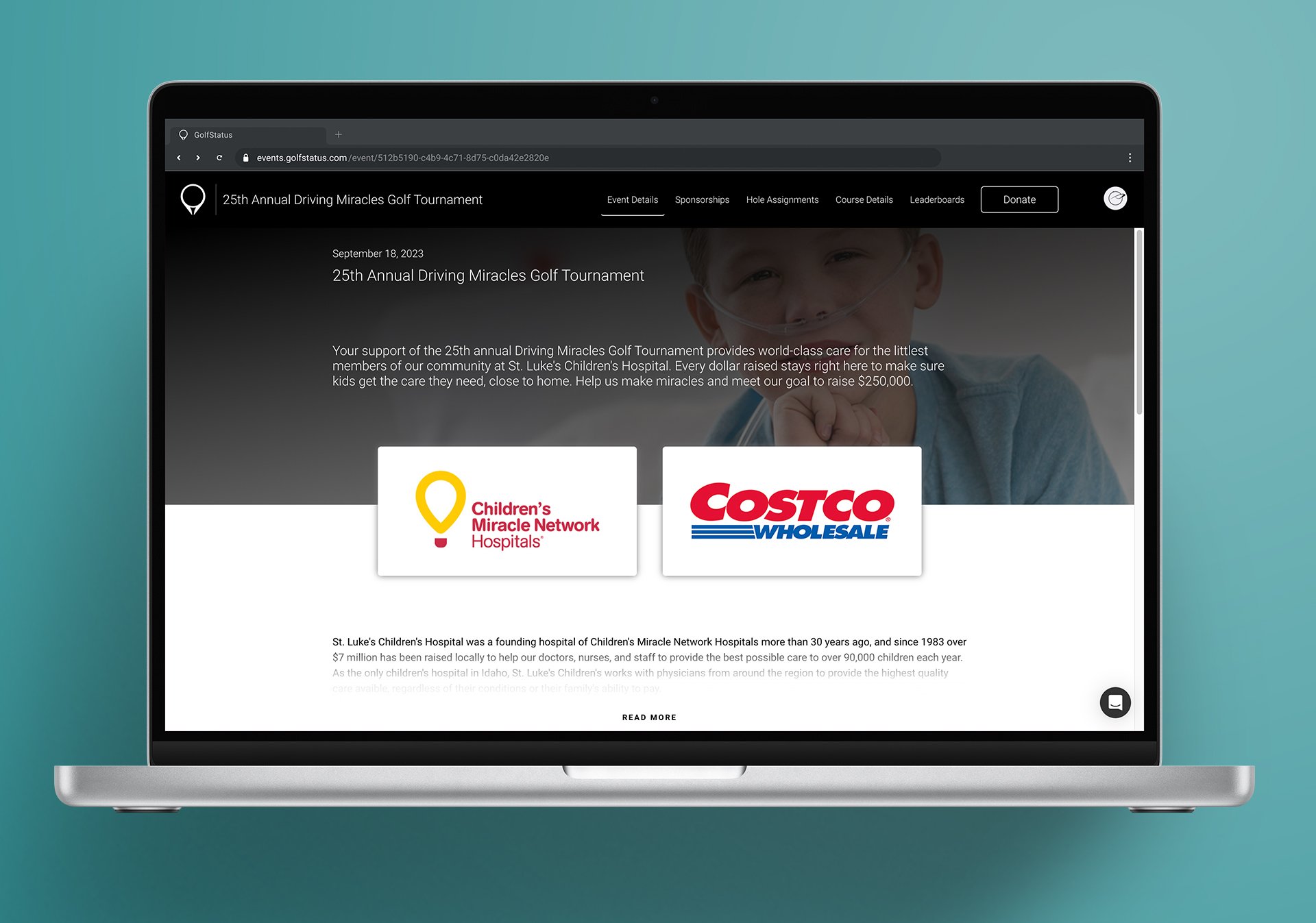
A website for a charity golf tournament

High quality, professional golf course signage certainly has its place in terms of sponsor recognition, but sponsors are increasingly looking for avenues to both support organizations and get their brands in front of the affluent golfer demographic. The good news for both nonprofits and sponsors is that the same technology that streamlines golf events opens doors for digital sponsorship exposure. Digital sponsorships can be sold at a premium, giving sponsors exposure to an audience they can’t get anywhere else and offering a high return on their investment. 

Corporate partners and sponsors have a vested interest in supporting the tech that helps organizations streamline clerical tasks and eliminate duplicative work. Plus digital exposure is easy to manage—just plug in a logo on a website, in a mobile app, or on your event’s live leaderboards. These methods take less time and effort, have little to no overhead costs, and have substantially lower expenses compared to traditional branded pieces.

What’s more, golf tournaments offer sponsors high engagement over the course of several hours on the course. Whether it’s sponsoring a golfer-favorite hole-in-one contest, setting up a booth on a tee box as a hole sponsor, or running an on-course game, golf events give sponsors the opportunity to engage with participants in meaningful ways.

6. GOLF TOURNAMENTS ARE FUN & EXCITING.

The difference between a good golf event and a great golf event is the overall experience. There are many ways to add fun and excitement (and raise a few more dollars along the way). On-course competitions like hole-in-one contests, longest drive contests, closest-to-the-pin contests, and putting contests let golfers test their luck (or skill) to win great prizes—and are premium sponsorship opportunities. 

For example, you can add a buy-in to your tournament’s skins games, which creates mini-competitions between individuals or teams. Displaying skins results on real-time leaderboards keeps golfers engaged.

Other fun add-ons might include:

  • A celebrity appearance

  • A professional long-driver on a designated hole or holes

  • Games or demonstrations on each tee box

  • Custom player gifts

  • Live or silent auctions

  • Post-golf entertainment

The options are endless—but the key is to choose components that contribute to a well-executed event and memorable experience that will keep golfers and sponsors coming back year after year.

7. ORGANIZING A CHARITY GOLF EVENT IS WORTH THE WORK.

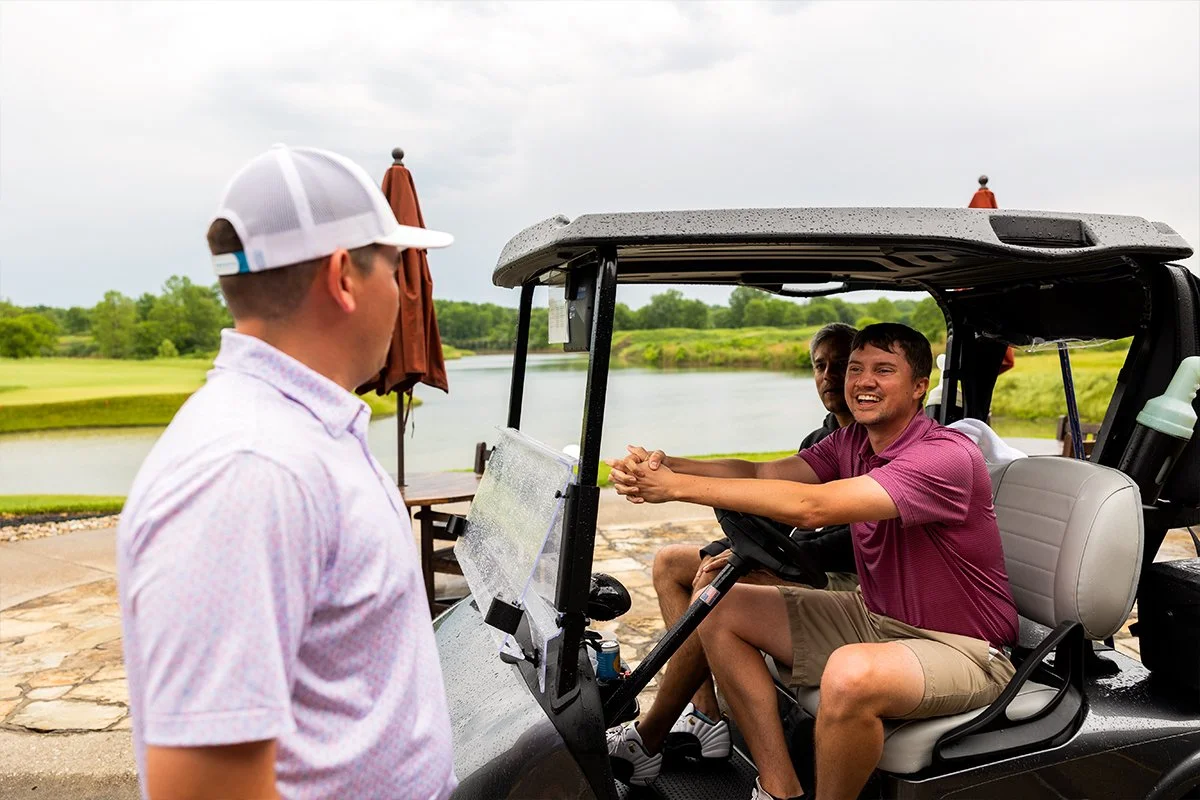
Three golfers chat in a golf cart during a charity golf tournament

Golf’s fundraising capacity is unmatched. And while golf events have a number of moving pieces and unique details to handle, the right tools can ease the administrative burden as you tick items off of your golf tournament fundraiser checklist. Golf event management tech eliminates manual registration and payment processes and siloed information, making it easier to collaborate and delegate tasks to teams, board members, volunteers, and even staff at the golf facility. 

Your golf event management software should have robust reporting capabilities so you can easily track payments and who is supporting your cause. It should also handle golf-specific tasks, such as:

  • Building custom sponsorship packages

  • Syncing GHIN handicaps

  • Simplifying team pairings

  • Streamlining hole assignments and hole-by-hole sponsor exposure

  • Making live-scoring super simple

If you’re a third party—a business, corporate entity, passionate volunteers, or other group—holding a golf tournament to raise money for a charity, your event management platform should be able to serve as the “bank” for your tournament. Funds collected through donations or purchases of teams, sponsorships, and add-ons can be held by the platform and distributed directly to the benefiting charity after the tournament is complete.

Truly, a fundraising platform designed specifically for charity golf tournaments ensures that no detail is missed. Look for the solution that leaves organizers free to recruit players and sponsors, solicit donations, and upsell and steward donor relationships in ways that advance the event and the organization forward.

Get a GolfStatus Demo


Golf Tournament Fundraiser Checklist

Two organizers reading papers at a charity golf tournament

A checklist, with an accompanying timeline of tasks, is a tried and true method to staying organized throughout the golf tournament planning process. Depending on the size, scope, and goals of your golf event, a good recommendation is to give yourself at least four to six months to plan. An event management platform built for golf is also a must-have to streamline the process and keep everything organized in one place.

Here’s a quick checklist of important tasks and to-dos to get you started.

3-6 Months Out: Laying the Foundation

  • Outline goals and objectives for the tournament based on your mission and fundraising goals

  • Assemble a planning committee

  • Get your golf tournament management software in place

  • Set a budget based on how much you aim to raise, income streams, and estimated expenses

  • Choose a date and host golf facility for the tournament

  • Start outlining team and sponsor pricing

  • Launch an event website

  • Create a marketing plan for the event

  • Determine whether you’ll have any add-ons, like contests, on-course games, raffle drawings, or an auction

2-5 Months Out: Big-Picture Finalization

  • Finalize sponsorship offerings and team packages

  • Get quotes from vendors

  • Meet with your planning team

  • Reach out to prospective sponsors

  • Promote the tournament

1-2 Months Out: Countdown Preparation

  • Continue promotion and marketing to sell teams 

  • Meet with your planning team

  • Finalize on-course games and purchase hole-in-one insurance

  • Determine a contingency plan for inclement weather

  • Recruit volunteers and determine roles

  • Continue sponsor outreach

2 Weeks Out: Final Touches

  • Meet with the planning team to tie up any loose ends

  • Finalize details and food and beverage with the golf facility

  • Check on outstanding vendor orders

  • Close registration

1 Week Out: Crunch Time

  • Collaborate with the golf facility to finalize team pairings, hole assignments, logistics, vendor deliveries, and setup

  • Gather supplies and materials (registration items, signage, banners, golfer gifts, raffle prizes, auction items, etc.)

The Big Day

  • Set up registration, signage, contests, screens for leaderboards, and awards

  • Take photos and post on social media

  • Take time to connect with sponsors to build donor relationships

1-2 Weeks Post-Event: Following Up

  • Export the donor data from your event management software to include in your nonprofit’s CRM

  • Debrief with your planning team to review goals, outcomes, and improvements for next year

  • Report on the event’s success to donors, volunteers, and sponsors

  • Send thank yous to event sponsors and participants


For a more in-depth list of planning tasks with a customizable timeline, download GolfStatus’ free Golf Tournament Fundraiser Timeline and Checklist.


Final Thoughts & Next Steps

Golf tournaments offer a ton of fundraising potential. Understanding the basics of charity golf events and staying organized and on track are keys to planning a successful golf tournament. Start by getting a golf event management platform in place as soon as possible, then outlining all your priorities and to-dos in a golf tournament fundraiser planning checklist.

Get qualified to use GolfStatus’ tournament management software at no upfront cost through the Golf for Good program! You’ll save 40 hours or more in planning time and get access to tools to help you raise thousands more dollars for your cause. Click below to connect with our team and get started.


About the Author

Jennifer Wemhoff - Communications Manager at GolfStatus

Jen Wemhoff accidentally discovered her passion for nonprofits in college. An internship while earning a degree in Communications from Doane University led to a 20 year career in the nonprofit sector, where she found a strong desire to be part of something bigger than herself. Her vast nonprofit experience includes roles in marketing, fundraising, and direct programming. When Jen came to GolfStatus as Communications Manager in 2020, she was struck by the power of the sport to raise money to power nonprofit missions. She tells GolfStatus’s story across platforms and channels and develops educational tools and resources to help nonprofits tap into golf’s giving power. Jen, her husband, and two daughters call Lincoln, Nebraska home.


How to Get Approval to Use Tech for Your Golf Tournament
 

by Jen Wemhoff, Communications Manager at GolfStatus

Technology has transformed the way nonprofits and other organizations plan and execute charity golf events, by streamlining processes, increasing participant engagement, and raising more money for important causes. But for many nonprofit organizers, implementing new technology for your golf tournament may require approval from superiors or a board of directors. If you’re in this boat and ready to jump on board with time-saving tech, here’s how to successfully get buy-in from decision-makers.

A group of people sit at a table as they plan their charity golf tournament.

1. Identify the problems technology will solve

Before getting into the weeds of the features and benefits of the tech platform, start by framing the conversation around the problems it will solve for your tournament and the planning team. Are you spending a ton of time manually processing registrations and payments? Are you bouncing between siloed tools and platforms that create cumbersome processes? Are you spending more time sending payment receipts than promoting your tournament or connecting with sponsors? Is it difficult to communicate with and engage participants?

Example:

“We’re currently manually processing tournament registrations and payments, which takes significant time and leaves room for error. Using a golf-specific event management software would automate this process, giving staff more time to focus on selling teams and sponsorships.”

2. highlight how technology boosts efficiency & revenue

A solution that increases efficiency and revenue from your golf tournament is sure to get the attention of decision-makers! Explain how a tool that’s built just for golf events can help increase the overall impact of your charity golf tournament by:

  • Saving time. Automate repetitive tasks like registration, payment processing, donation receipts, registration closing dates, and more.

  • Increasing engagement. Tech that includes communication tools and solutions like live leaderboards offers increased engagement with golfers and sponsors, which creates a stronger connection to your nonprofit’s cause.

  • Raising more money. The right tech platform brings opportunities to drive revenue, like online donations, a round-up feature at checkout, exclusive sponsorships, premium digital exposure, and add-ons.

  • Simplifying post-tournament accounting. If you’re a third party holding a golf tournament to raise money for a charity, your platform can function as the “bank” for the event. Funds are collected and held throughout planning and can be distributed directly to the charity after the event.

Example:

“Golf event management software can save our planning team 40 hours or more and help bring in an extra $4,000 or more in additional revenue.”

A screenshot of a golf tournament's registration screen is shown on a laptop.

3. share real-world examples from other nonprofits

Nothing drives home how well a tool works than showing how your peers have benefited from it. Show decision-makers how other nonprofits and events have successfully adopted tech for their golf events and the positive ROI they experienced. Seek out case studies, talk to other golf tournament organizers, or look at online reviews (such as Google or Capterra) to help make your case.

Example:

“The Golf Fore Kids Classic cut their administrative time in half by using golf event management software and sold out their sponsorships thanks to the extra digital exposure provided by the platform.”

4. provide a cost-benefit analysis

Many boards or leadership teams will likely have concerns about the cost of implementing a new technology—both in terms of the cost to use the software as well as staff time spent learning to use it. Prepare a cost-benefit analysis that outlines upfront costs, any additional fees or estimated costs, and the projected benefits to help alleviate financial concerns. Compare all costs to the potential revenue increase and savings on time and effort.

Example:

“The golf event software I’m exploring comes with no upfront cost and minimal processing fees, which we can pass along to golfers and sponsors. There’s no risk to us to try it.”

Two men look at a phone on a golf course.

5. demonstrate how tech enhances the tournament experience

Your organization’s decision-makers will likely be interested in how any technology will impact tournament participants and the overall experience. Demonstrating how it will improve the experience for golfers, donors, sponsors, and volunteers is a key part of getting their approval. For instance, golfers and sponsors expect online registration with secure payment processing and a simple checkout process. Other experience-enhancing features might include live scoring and leaderboards, online donations, and a donation tracker.

Example:

“Golfers and sponsors will have a better experience with online registration, live scoring, online donations, and digital sponsor exposure, which increases the likelihood that they’ll come back year after year.”

6. Get them to see a demo or explore the software

The best way to convince your team? Let them see it in action! Book a quick demo so they can ask questions firsthand or share access to the software so they can explore it on their own terms. Either way, they’ll see the platform’s benefits and capabilities to ease their concerns about making the jump to a new tool.

Example:

“We can schedule a quick 15-minute call with an account rep to go over the highlights of the software and you can ask questions and have your concerns addressed.”

A man wearing a headset gives a software demo at a computer.

7. overcome red tape & bureaucratic hurdles

In many organizations, even the most beneficial changes can face obstacles due to red tape or bureaucratic processes. While it can be frustrating, you can take steps to navigate these challenges:

  • Anticipate blockers. Understanding the processes will help you prepare for approval, particularly if multiple departments are involved. By identifying delays ahead of time, you can proactively account for them. These might include legal compliance checks, approval from finance or accounting, and a sign off from IT.

  • Get the buy-in of key stakeholders. Decisions can be delayed when certain leaders aren’t fully on board. Talk with the necessary individuals or departments ahead of time to explain the benefits and address any concerns at the outset.

  • Create a clear implementation plan. Provide a step-by-step plan with timelines and how the tech will be integrated with minimal disruption in the day-to-day operations and the overall tournament flow.

  • Address concerns head on. Change can be scary, so think through potential objections and offer clear solutions that address concerns about switching to a new tech tool for your golf event.

  • Be patient—but persistent. Overcoming red tape is an exercise in patience, but also in following through. Find a balance between keeping the tech proposal top-of-mind while allowing it to work through the system.

Example:

“I’ll work with finance and IT to get their blessing first, then create an implementation plan that includes ample time for staff training ahead of the golf tournament, and follow up regularly with department heads to keep this request moving forward.”

Other things to mention

  • Support. They’ll want to know if there is a team of knowledgeable, responsive folks available to help troubleshoot, provide coaching, and assist you and your golfers—and if there’s any cost to access the support team.

  • Security. You might discuss the tech provider’s security standard, such as PCI-compliance (for credit card transaction) and data privacy.

  • Long-term benefits. Share how easy it is to copy an event each year so there’s no need to start from scratch. This takes advantage of processes and event infrastructure that have already been built, ultimately saving your team time.

Next Steps

Getting approval to implement new technology for your charity golf event comes down to clearly communicating its benefits, addressing concerns, and showing how it can lead to greater success for both the event and your nonprofit as a whole.

A platform like GolfStatus, which is built specifically for golf events, is a great option to streamline your tournament from top to bottom. It starts with an event website with integrated online registration and payment processing, built-in time-saving automations, and opportunities to raise thousands more dollars. Nonprofits and third parties planning charity golf events can qualify to use GolfStatus at no upfront cost through the Golf for Good program.

Book a Demo to Get Started With GolfStatus!


A Q&A With PGA Professionals: Choosing a Golf Facility
 

When it comes to running a successful golf tournament, choosing a host golf facility is one of the biggest decisions you’ll make. Having the right expertise can make all the difference—PGA Professionals are experts in every aspect of the game, including event management, facility operations, and ensuring everything runs smoothly.

This blog series will continue to tap into the collective knowledge of the PGA Professionals at GolfStatus—Cash Dinkel, PGA; Jason Meininger, PGA; and Paul Murcek, PGA—to explore how to choose and work with the host golf course.

Image of three men hitting golf balls.

The PGA Professionals on staff at GolfStatus, from left: Paul Murcek, PGA; Cash Dinkel, PGA; Jason Meininger, PGA


Q: My organization has decided to move forward with a golf fundraiser. How do I pick a golf facility?

Jason Meininger: There are really three main factors in choosing a golf course: location, cost of the course, and the demographics of your target market.

Cash Dinkel: Most often, the biggest factors are pricing per player and the demographics of your potential sponsors and players. A private, high-end country club is going to charge a much higher price, but hosting at that type of facility lets you charge more for registrations and sponsorships and may attract higher net-worth individuals to participate. It’s important to keep your expenses in mind with this type of facility—your overall fundraising goal needs to be higher to ensure expenses are covered. Location is another important factor. You want to make sure players and sponsors are located close to the facility to drive maximum participation. When looking at courses, I would recommend reaching out to two or three options and ask staff for contacts of previous event organizers to see if they enjoyed hosting their event at that facility.

Paul Murcek: This can be a tough decision. It comes down to a combination of affordability and golf course name recognition. Having your tournament at a course or a club that most people can't typically play at can equal more golfers, but if the cost is too high, it can also price out potential golfers. So it’s definitely about finding the right balance.

An aerial view of a golf course with mountains in the background.

Several factors play into choosing a golf course for your golf tournament, including cost per golfer, location of the facility, and the demographics of your tournament's target market.

Q: What questions should I ask golf staff when looking at potential host facilities?

Paul Murcek: What is included in the fee per golfer (greens fee, cart, range balls)? Is there a minimum number of golfers or teams required? Can they provide pro shop credit? How does the facility typically handle scoring the event?

Cash Dinkel: The best advice I can give tournament organizers is that if you don’t know, don’t be afraid to ask. Golf staff are experts in hosting great events and they are willing to answer any questions you may have. Some important things to ask them about include:

  • Pricing

  • Set up on the day of the event

  • What the course provides (things like tables, chairs, meals, scoring, contest setup)

  • Schedule for the day,

  • If range balls are provided

Jason Meininger: Beyond general pricing, I recommend asking what’s the normal golfer rate at the course at the time of your tournament. If the price is higher, be sure that it includes things like drink tickets or gift cards for prizes. You should also ask about food and beverage options—do you have to purchase from the course or can I bring in my own? Are beverage carts available? Other big topics are the course’s rainout or cancellation policy, required deposit to hold the date, and when final payment is due.

Golfers enjoy lunch at a charity golf tournament before heading out to play.

It's a good idea to review the contract's list of charges with golf course staff prior to signing and checking on details like adding an automatic gratuity to food and beverage.

Q: What are some fees or costs I should be aware of or watch out for before signing a contract with the golf facility?

Jason Meininger: Check to see if there’s a fee or penalty for not meeting the minimum number of golfers, if there are costs for extra cart rentals, and if they add an automatic gratuity to food and beverage.

Cash Dinkel: Read the contract closely for price per player, if there’s a minimum number of players required, if there are any fees for using the course’s software or scoring (be sure to mention you’re using GolfStatus to avoid any such fees), or fees for using the facility’s equipment (tables, tvs, chairs, tents, etc.). I recommend going through the list of charges in detail with the golf course to fully understand what you're going to be charged for the day of the event.

Q: What’s typically included in the price to hold a tournament at a golf course?

Cash Dinkel: The main things are green fees and cart fees. Some courses might also include food and beverage or credit to the golf shop to give as player prizes.

Jason Meininger: Most courses I’ve worked at and with include green fees, cart fees, range balls, shop credit, and food and beverage.

Golf carts are lined up prior to the start of a charity golf tournament.

Check with the golf facility on what the price per golfer includes, such as greens fees and cart fees.

Q: A lot of tournament organizers are concerned about inclement weather on the day of their event. How do you suggest planning for the weather?

Cash Dinkel: Plan for the worst and hope for the best! Always have a backup plan just in case. If it looks like the weather will affect your event, start communicating with golfers and sponsors earlier rather than later. Check in with the golf course to see what their policy is and start thinking about possible dates to reschedule (this is also something to check on before you sign a contract with the golf course). Communicate with your players and sponsors that inclement weather may be present on the day of the event and more communication will come the morning of the event either way.

Jason Meininger: This is a difficult one, but I usually tell organizers to look for a makeup date and reschedule the event if at all possible. As long as there is no lightning, I would move forward and play the tournament. I’ve worked with several events that were shortened to nine holes (instead of the full 18) holes based or canceled due to the weather.

Paul Murcek: Definitely check with the course to see if they allow a makeup date for the tournament. I worked with the Parkinson Association of Central Florida who had to reschedule their tournament in 2022 when Hurricane Ian hit Florida. They communicated with their field and everything worked out well.


Ask the Pros!

Do you have a golf tournament question for our PGA Professionals? Email it to events@golfstatus.com with “PGA Pro Question” in the subject line and it might make a future blog post or be answered on an upcoming GolfStatus webinar!

GolfStatus’ team is ready to help you make your next golf event the best one yet. Nonprofits can qualify to use GolfStatus’ tournament management software at no upfront cost through our Golf for Good program. You’ll get an event website, online registration, communication tools, exclusive sponsorships and add-ons, and much more—plus access to our knowledgeable client success team. Click the button to get started!
Get qualified
 
 
Requesting Auction Donations From Golf Fundraiser Sponsors
 

by Jen Wemhoff, Communications Manager at GolfStatus

A woman makes a bid during a live auction at a charity golf tournament.

Combining an auction with your charity golf tournament adds an engaging and lucrative fundraising component to the event. Your organization has a lot of flexibility when it comes to planning an auction—you can choose between:

  • A silent auction

  • A live auction

  • An in-person, virtual, or hybrid auction

  • A combination of the above

Once you’ve determined the auction’s format, the most important (and often most challenging) part of the auction planning process is procuring items that appeal to your tournament’s participants while keeping upfront costs low. One of the best ways to strike this balance is to request in-kind donations of auction items from event sponsors.

Here are  three tips for requesting auction item donations from your tournament’s sponsors.

1. Know What Types of Auction Items to Ask For

Before you start requesting auction item donations, bring your planning team together to collaboratively create a wishlist that will guide your solicitation process. As you make this list of desired auction items, prioritize those that tend to sell well at auctions and that appeal to your event’s target audience.

Image of a putting green on a golf course.

A stay and play experience at a luxury golf club is a great choice for a live auction at a golf fundraiser.

According to Winspire, the top 10 types of charity auction items include:

  • Vacation Packages. In addition to sightseeing tours or cruises, golf fundraiser participants will likely also enjoy a stay and play experience at a luxury golf club.

  • Gift Baskets. Popular auction gift baskets are typically designed around creative themes or related to golf in some way.

  • Event Tickets. These might be to shows, concerts, or even professional golf tournaments.

  • Signed Celebrity Memorabilia. Ideas might include golf balls, pin flags, or other golf equipment signed by famous golfers. Don’t feel like you have to limit yourself to golf memorabilia—golfers are likely also interested in other celebrity items.

  • Artwork and Antiques. Include pieces with ties to your local community or by local artists.

  • Gift Certificates or Gift Cards. Sponsors are often happy to donate gift cards for goods or services ranging from personal training to auto detailing.

  • Family-friendly Activities. These items are an opportunity to engage golfers with children or grandchildren.

  • Fine Food and Beverages. Items should cater to a variety of preferences.

  • Popular Technology. New smartphones, tablets, headphones, fitness trackers, rangefinders, or other gadgets are popular auction items.

  • High-end Goods. Some ideas for golf tournaments include new golf clubs, golf bags, or gift cards for brand-name golf apparel.

Realistically, you only need to procure five to 10 items for a live auction, while silent auctions can feature 100 items or more since bidding can happen before, during, and after the round. Keeping this in mind, prioritize your wishlist of items based on which items you consider “must-haves,” which ones would just be nice to have, and backup ideas to fill out your slate of auction items as needed.

2. Craft Compelling Donation Pitches

Whenever possible, approach potential golf tournament sponsors by meeting with them in-person or via video chat. This way, you can work out the exact details of the sponsorship agreement together and create a better partnership experience for both parties. 

However, it’s still a good idea to put together a donation request letter for every potential sponsor you contact. This document serves as the ask itself in case you can’t meet with a sponsor personally, and it can help guide the conversation if you can set up a meeting.

In each donation request letter, make sure to include:

  • Your Organization’s Branding. NXUnite’s nonprofit branding guide recommends incorporating your logo, color scheme, and brand fonts into donation requests to build trust with potential sponsors and make the letters look more professional.

  • Mission Information. This section will vary depending on whether you’ve worked with this sponsor before. If not, provide a broad explanation of your organization’s mission and work, supported by impact stories and statistics as appropriate. If they’ve partnered with you previously, explain the purpose and goals of your event.

  • A Specific Request That Aligns With the Sponsor’s Business Model. This shows the sponsor that you’ve considered how they can contribute to your event and helps them make an informed decision. For example, instead of asking a sporting goods store owner, “Would you be interested in donating a prize for our auction?” say, “Would you be willing to contribute a complete set of golf clubs as an auction prize?”

  • Donor Recognition and Benefits. The most effective sponsorships are mutually beneficial, so let businesses know what’s in it for them if they donate auction items to your event. Typically, your organization will provide sponsors with publicity before and during the event, but elaborate on the channels and number of materials you plan to feature them in in your pitch.

  • A Response Deadline. This helps ensure you receive a response well in advance of your event without pressuring sponsors to commit immediately.

In addition to the request letter, provide each sponsor with an in-kind donation form to make it as easy as possible to collect key details about each item (description, estimated value, etc.). Once you start getting responses, use an auction management platform to keep all of your items organized and facilitate online bidding.

An online bidding page for a golf tournament auction is displayed on a laptop computer.

An online auction platform makes it simple for golfers to bid on desired items 

3. Be Prepared to Pivot

Even if you present well thought out, professional auction donation requests to potential golf fundraiser sponsors, some of them may turn down your initial solicitation—which is completely normal.

However, when you receive a rejection, you need to be ready to adjust your strategy so you can still make the most of your efforts. Determine the sponsor’s reason for turning down your ask, then use the following strategies to adjust your approach:

  • If the sponsor isn’t willing to provide the specific item you requested but is still interested in donating an auction prize, present a few backup offers that also align with their business model but are potentially lower-value or lower-demand. For example, if the aforementioned sporting goods store owner says no to your request for a set of golf clubs, see if they’re willing to provide a voucher for golf shoes in the winning bidder’s size or a general store gift card instead.

  • If the sponsor wants to contribute an item but won’t let it go for free, try to negotiate a discounted price for fundraising purposes to maintain low upfront costs.

  • If the sponsor is interested in supporting your event, but not via an auction item donation, discuss alternative sponsorship options with them. Review your golf tournament’s monetary sponsorship tiers with them so they can choose an option that aligns with their budget. Or, if the business could provide other supplies or a service for the event (such as a restaurant donating catering services), present them with that option.

  • If the sponsor doesn’t want to contribute to your event at all, thank them for their time and move on to other sponsors or individual donors who might be able to provide the item you’re looking for.

Make sure to digitally track all sponsorship requests and responses so that when you host your next charity golf tournament, you can reference this information and approach sponsors even more strategically.

A donated auction item is on display at a golf tournament auction.

Donated items from sponsors significantly reduces overhead costs and ensure more revenue for your nonprofit.

Wrapping Up

Once you’ve secured a variety of auction item donations from your golf fundraiser sponsors, remember to follow through on your donor recognition promises—whether you shout your sponsors out on social media, include their logos on your event signage, mention them in your introductory speech, or other means of recognition. You might also consider going the extra mile and providing a small token of your gratitude for their support. This commitment to showing appreciation and looking out for their interests will contribute to longer-term, stronger partnerships with your nonprofit’s corporate sponsors.

Golf for Good

GolfStatus’ golf event management software can make your charity golf event simpler than ever. And with client-only add-ons like auction software, tournament organizers can save a ton of time and raise even more money for their cause. Nonprofits can qualify to use it at no cost through the Golf for Good program. 

Get Started
 
Best PracticesDavid Li
10 Last Minute Golf Tournament Details You Might Not Be Thinking Of
 

by Cash Dinkel, PGA, Client Success Director at GolfStatus

It happens to the best of us—you’re sure all your i’s are dotted and all your t’s are crossed for your golf tournament, but as the day draws closer, unexpected issues and tasks may pop up and must be handled. Here are 10 commonly overlooked tournament details you might not be thinking of (but definitely should be!):

1. Event Website Updates

Your event website is the hub for your tournament. It can be tempting to set it and forget it, but it’s necessary to keep it up to date. As the tournament gets closer, ensure the sponsor and team package quantities remaining are correct, that expiration dates are applicable, and a registration close date is clearly stated and communicated to prospective sponsors and golfers.

A golf tournament website is displayed on a laptop computer.

2. Weather Plans

Weather is one of the few factors for your golf tournament that you have no control over. That being said, you can be prepared. Think through an inclement weather plan for all scenarios and work with the golf facility to determine a backup tournament date, if applicable. If the forecast calls for hot weather, ensure you have plenty of water on hand for staff, volunteers, and participants. If it will be uncomfortably cold, think about providing hot coffee or cocoa to keep participants warm. Above all, you’ll want to constantly monitor the weather leading up to the tournament and fine-tune your contingency plans and how you’ll communicate those to participants.


Pro Tip:

GolfStatus’ tournament management platform includes a messaging feature that makes it simple to send emails or push notifications to registered golfers and sponsors with just a few clicks.


3. Volunteer Management

Volunteers are a crucial part of your event. Make sure you’ve assigned and communicated clear roles and expectations to all volunteers and have a point person to manage volunteers throughout the tournament. Be sure to take care of them, providing food and beverage, chairs, a shade tent, or other items to keep them comfortable and feeling appreciated.

4. Golfer/Team Waitlist

If you have a cap on the number of individual golfers or teams that can play in your event, game plan how you’ll handle a waitlist. Many tournaments offer a waitlist so teams or individuals can fill a spot left by a cancellation or other circumstances. If your teams are getting close to sold out, determine if you’ll offer a wait list, how you’ll handle registration and payment with folks on the waitlist, or whether or not you’re able to accommodate additional teams by doubling up on holes (if allowed by the golf facility and keeping pace of play in mind).

Two men high-five while a third walks toward his ball at a golf tournament.

5. Printing & Order Deadlines

Give yourself enough lead time to order any signage, banners, apparel, player gifts, branded merchandise, or other items to arrive in plenty of time for your tournament. Check with your vendors on production/turnaround times to ensure you’ll have everything you need for tournament day.


Pro Tip:

Check out the GolfStatus Marketplace for trusted third party vendors on everything you need to make your tournament unforgettable, like signage, pin flags, auction software, hole-in-one contest insurance, and much more.


6. A/V Equipment

Coordinate with the host golf facility to determine what A/V equipment they have available and what you’ll need to bring on your own. Equipment needs might include a microphone and portable speaker for the welcome; televisions to display live leaderboards (either inside or outside the clubhouse); laptop, screen, and projector for the awards ceremony or banquet; and any necessary cords for power or connections.

7. Day-of Supplies

Tournament day can be hectic, so plan ahead and make sure you have all the supplies you’ll need for a smooth event. These include items for registration, on-course games, signage, raffle prizes, auction items, and A/V items.


The Complete Event Day Guide for charity golf tournaments

This free guide includes a tournament day checklist of everything you need for a smooth-running event, plus tips on live scoring, using your website to communicate with participants, and suggested reports and documents.

Download now!


8. Food & Beverage

This deadline often sneaks up on tournament organizers. Whether the golf facility is providing all food and beverage or an outside vendor or caterer is supplying them, be sure to touch base with them to set a deadline to provide final numbers, confirm menus, and talk through the details of when and how food will be distributed. If you’re providing food and beverage for golfers and sponsors, it’s a good idea to ask for any dietary restrictions at registration.


Pro Tip:

Food and beverage are prime opportunities for sponsorships. Consider a Lunch Sponsor, Beverage Cart Sponsor, Bar Sponsor, Drink Ticket Sponsor, Snack Sponsor, or other sponsor that helps cover the hard costs associated with food and drink.


9. Parking

Most golf facilities have ample parking available, but you might want to verify plans for overflow parking if you’re expecting a sold out field of golfers along with sponsors, volunteers, staff members, and guests. The last thing folks want to deal with as they arrive for a fun day on the golf course is a full parking lot and no other options for their vehicle. Consider assigning a volunteer to direct traffic to maximize parking lot use, having a spot for golfers to drop their golf bags before they park, and ensuring there is accessible parking available.

10. Prizes & Giveaways

Don’t wait until the last minute to determine the prizes you’ll provide to the tournament’s champions, winners of on-course games, and contests, as well as golfer gifts. Give yourself plenty of production time for trophies or plaques, and seek donations for auction items, raffle prizes, pin prizes, golfer gifts, and other giveaways to save money on costs.

A plaque is presented to the winner of a charity golf tournament.

Stay Organized With Golf Tournament Tech from GolfStatus

Golf tournaments come with enough details to handle—the last thing you need is a clunky event management platform that requires workarounds to function for a golf event. GolfStatus is built for golf and makes it easy for tournament organizers to stay organized, save a ton of time, and easily collaborate with planning teams and the golf facility.

Nonprofits, charities, and third parties holding a golf fundraiser can qualify to use GolfStatus—with a free event website, online registration, client-only sponsorships, an A+ support team, and much more—at no upfront cost through the Golf for Good program. Click below to get qualified and create a tournament in minutes!

Get Started
 
 
A Q&A With PGA Professionals: The Ins & Outs of Contests
 

No one knows the ins and outs of a golf tournament like a PGA Professional. These individuals bring a high level of expertise to all aspects of golf, including facility operations and management, customer service, finances, event management, and, of course, the game itself.

This Q&A blog series will share the collective wisdom and experience of the PGA Professionals on staff at GolfStatus—Cash Dinkel, PGA; Jason Meininger, PGA; and Paul Murcek, PGA—about topics relevant to charity golf tournaments. This installment will take a closer look at contests and how to work with the PGA Pro on staff at your event’s host golf facility to make them a success.

The PGA Professionals on staff at GolfStatus, from left: Paul Murcek, PGA; Cash Dinkel, PGA; Jason Meininger, PGA


Q: My planning team made the decision to have a hole-in-one contest at our upcoming tournament. What’s next?

Cash Dinkel, PGA: To start, list a Hole-In-One Contest Sponsorship. This covers the cost of the insurance and offers a unique sponsorship. I always recommend allowing the sponsor to set up a tent or table on the contest hole. Sponsors are looking for ways to interact with golfers and there’s no better way to do that than being on the course on the most exciting hole of the day. Once you list the sponsorship, work with your contest/insurance provider to get all the rules and details around the contest.

Q: How can the golf pro help us with the hole-in-one contest?

Jason Meininger, PGA: You’ll want to get in touch with the golf professional so they can help you determine which hole or holes you should use for the hole-in-one contest. This makes sure you have the proper distance requirements for the hole-in-one insurance.

Cash Dinkel, PGA: You should definitely loop the golf professional in so they know exactly what’s going to be happening the day of the event and help you choose the contest hole. You should go over the contest rules with them so they can help ensure the hole is set up within the insurance company’s guidelines (hole yardage, number of players, etc.). In the final days leading up to the event, the pro can help you double-check that the hole-in-one contest is set up correctly and ready to go.

A golfer hits a tee shot on a par three as part of a hole-in-one contest.
 

Q: I’m interested in GolfStatus’ Bundle Hole-In-One Package. What are some ways you’ve seen tournaments effectively split up the contest holes?

Paul Murcek, PGA: The most common way I’ve seen it done is to split the contest into two holes, one on the front nine and one on the back nine, with $10,000 cash and a Dormie Network Stay and Play package as prizes.

Jason Meininger, PGA: I’ve worked with a few 27-hole events and facilities. They typically split it up over three holes, one on each of the three nines, with a $7,000 prize on each. That way no matter what nine holes are being played, every golfer has a chance at a hole-in-one contest.

Cash Dinkel, PGA: I see a lot of events that run two contest holes, with a $10,000 cash prize on each hole plus a Dormie Network membership. I’ve even seen it split over four holes, with $5,000 cash for each contest hole. That’s the cool part about that package, it gives the organizer a lot of flexibility.

Q: What does the golf pro usually take care of in terms of other contests, like longest drive or closest to the pin?

Jason Meininger, PGA: When I was the head pro at a golf course, I would primarily take care of making up and setting up the flag prizes and picking them up after the round (if the players didn’t bring them in). I would also provide the event organizer with a document listing the holes and each winner’s name.

A PGA Professional provides guidance while a golfer takes a swing.


Paul Murcek, PGA:
Most golf pros will set out proxy markers or hole contest signs for the organizer. Some golf facilities that I’ve worked with build in prizes with pricing, such as prizes for flight winners of a free round at that course or a gift certificate to the pro shop. This removes the burden of finding prizes for the tournament winners from the organizers.

Cash Dinkel, PGA: Some courses will set everything up for you, provided you let them know the details about the contest, and let you know the winners’ names after the event is over. Some facilities might require you to select the holes, but they’ll still take care of putting out the proxy markers and provide you with the winner’s information. Very rarely will the organizer have to handle everything from selecting the hole, setting out proxies, and collecting them post-event.

A: What type of contest do you think has the most revenue potential and why?

Cash Dinkel, PGA: A hole-in-one contest for sure. If it’s sold as a sponsorship, the contest can generate a few thousand dollars of revenue even after the insurance premium has been paid. Most events I work with bring in around $1,500 in revenue from a hole-in-one contest sponsorship.

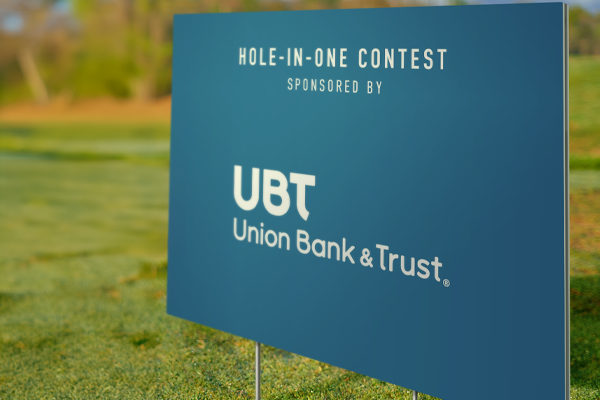
A sign announcing the sponsor of a hole-in-one contest at a charity golf tournament.


Jason Meininger, PGA:
Other than hole-in-one, I’d say a putting contest. It’s fast, easy to run, and you can have every golfer putt at the same hole at the same time.

Paul Murcek, PGA: I think next to a hole-in-one contest, a closest to the pin contest on a par three or a hit the green on a par three. In my experience, people are generally willing to pay the money to move their ball up a few yards.


Ask the Pros!

Have a question for our PGA Professionals? Email it to events@golfstatus.com with “PGA Pro Question” in the subject line and it might make a future blog post or be answered on an upcoming GolfStatus webinar!

Ready to get started with no-cost golf event management tech? Nonprofits can qualify to use GolfStatus—with an event website, online registration, communication tools, premium digital sponsor exposure, revenue-boosting add-ons, and more, plus access to GolfStatus’ in-house client success team (including knowledgeable PGA Professionals)—all at no upfront cost through our Golf for Good program. Click the button to find out more and get qualified!

Get qualified
 
 
7 Myths About Charity Golf Tournaments & Why They’re Not True
 

by Jen Wemhoff, Communications Manager at GolfStatus

It happens all too often—nonprofits looking to add a new revenue stream to their fundraising portfolio write off the possibility of a golf tournament because they have preconceived notions about such events. From misunderstandings about income potential to doubts about their true impact, these myths can deter organizations from jumping into golf fundraising.

Here are seven common myths about charity golf tournaments—and the facts that prove them wrong.

A woman writes on a notepad while working on a computer planning a charity golf tournament.
 

Myth #1: You have to know all about golf to be successful

Fact: You don’t have to be a golfer or understand the intricacies of the game to plan a lucrative golf tournament.

A deep knowledge of the game simply isn’t necessary. In fact, many successful golf tournament organizers aren’t golfers. What do they have to help them be successful? A golf-specific tool that helps them manage the intricacies of a golf event. The key here is using an event management platform that’s designed for golf and makes it easier for tournament organizers of all experience levels to plan, manage, and execute a lucrative golf tournament. You’ll want a software solution that lets you effortlessly collaborate with your planning team and the golf facility and has a knowledgeable, responsive support team to help you along the way.

Myth #2: It’s impossible to make money from a golf tournament

Fact: Golf tournaments have a ton of revenue potential.

Whether you hold an 18-hole golf tournament at an exclusive, high-end private golf club or a putt putt event at a local mini golf course, golf comes with a ton of fundraising potential. While there are certainly expenses associated with a golf event—such as facility rental, greens fees, cart rental, food and beverage, player gifts, and promotional expenses—there are even more opportunities to bring in funds. Sponsorships are where you’ll likely raise the bulk of your tournament’s money, but they can be supplemented by golfer registrations, add-ons like mulligans or contest entries, raffle tickets, auctions, on-course games, or donation appeals.


Download a free budget template

This sample golf fundraiser budget spreadsheet helps charity golf tournament organizers outline, plan, and manage the event's budget. Simply add your tournament's specific information and get a clear overview of all revenue and expenses associated with the event, track vendor estimates, and instantly see a profit-loss summary.


Look for an event management platform that comes with multiple avenues to raise additional funds, such as:

  • Premium digital sponsorships

  • The ability to collect donations on your event website

  • The ability to pass processing fees on to registrants

  • The ability for registrants to “round up” their order total

  • Custom registration packages for mulligans, contest entries, raffle tickets, and more

A screenshot of the checkout screen of a golf tournament website is displayed on a laptop.

An attractive, professional event website makes it easy to raise even more money from a charity golf tournament.


Myth #3: I don’t need golfers in my donor base

Fact: Golfers represent a highly desirable demographic of potential donors.

If you’re not holding a golf tournament, or worse yet, not collecting golfers’ donor data, you’re missing out on an affluent, influential demographic of the population. In general, golfers have a significantly higher than average net worth and annual income—giving them a higher capacity to give. Over half of golfers are between the ages of 25 and 55, an age group with a great deal of spending power and an interest in supporting charitable causes through a sport they enjoy.

What’s more, when golfers tap their networks to assemble a team for a charity golf outing, your donor base instantly expands, exposing even more people—and more potential donors—to your work and mission. Your tournament’s sponsors also present an opportunity to forge strong relationships with new or existing corporate partners for support beyond your golf event.

Myth #4: Golf Tournaments Are Outdated & Boring

Fact: Golf is more popular than ever.

The National Golf Foundation reports that 531 million rounds of golf were played in 2023, which surpasses the previous record high set in 2021. In general, rounds played are up 10% from the pre-COVID average between 2015 and 2019. Roughly one-third of the total population of the United States (over the age of five) interacted with the sport in some way in 2023, either by playing golf, following it on TV or online, reading about it, or listening to a golf-related podcast—which is up 30% since 2016.

Why are these numbers important? Because charity golf tournaments tap into golf’s surging popularity, meeting donors where they’re already spending time—on the golf course. When golfers are able to support a cause they care about or one they’ve just learned about because they played in a tournament, they’re more likely to come back year after year to engage with that organization.

Two men bump fists on a golf course at a charity golf tournament.

Charity golf tournaments meet donors where they’re already spending time—on the golf course.


Successful golf tournaments also focus on the overall experience, providing a professional, memorable day for golfers and sponsors. There are a number of ways to add fun, excitement, and even extra fundraising to charity golf tournaments, such as:

  • Contests, like hole-in-one, longest drive, closest to the pin, or putting

  • Skins games

  • Beat the pro contest

  • Mulligans

  • On-course games or challenges

  • Live or silent auctions

  • Demonstrations on tee boxes

  • Post-golf entertainment

  • Custom player gifts

  • Live leaderboards

Myth #5: Sponsors Aren’t Interested in Supporting Golf Tournaments

Fact: Golf tournaments have a unique value proposition.

Golf events offer a unique blend of engagement, networking, and fun that other fundraising events simply can’t match, making them especially attractive to sponsors. Unlike traditional fundraisers, like galas, golf tournaments provide participants with a full day of an activity they enjoy. The nature of golf encourages interaction and relationship-building in an informal, relaxed setting, which can be especially beneficial for sponsors looking to connect with golfers on a more personal level.

Golf tournaments also present numerous opportunities for creative sponsorships and branding that are less intrusive—but more effective and memorable. The addition of the digital exposure and impressions provided by your golf event management platform gives sponsors multiple touchpoints to gain visibility and recognition throughout the event. Having a variety of sponsorship options also accommodates different levels of financial commitment, making it easier to attract sponsors with varying budgets.

A screenshot showing sponsor logos on a golf tournament website is displayed on a laptop computer.

Digital exposure adds a ton of value to golf tournament sponsorships.


Myth #6: Golf Tournaments Are Too Much Work

Fact: With the right technology in place, golf tournaments provide tremendous ROI for nonprofits and charities.

Yes, golf events come with a number of moving pieces and unique details to handle. But having the right resources at your disposal saves time, effort, and hassle. Technology specific to golf tournaments simplifies planning, management, and execution, with baked-in solutions that make it a breeze to:

  • Promote your tournament

  • Collect registrations

  • Build and sell custom sponsorship packages

  • Onboard sponsors and provide digital exposure

  • Manage golfer and sponsor data

  • Make hole assignments

  • Collaborate with the golf facility’s staff

  • Print day-of documents

  • Run reports and track payments

Instead of siloed information across multiple platforms and spreadsheets, golf event management tech makes everything accessible with one login. And unlike traditional event management platforms that require endless workarounds to function properly for a golf tournament, you can handle golf-specific tasks like GHIN handicaps, team pairings, hole assignments, and live scoring with just a few clicks. The end result? A ton of time savings and more money raised for your mission.

A man wearing a headset sits at a desk working on a computer.

GolfStatus’ in-house client success team is available with live support seven days a week.


Myth #7: There’s No One to Help Me

Fact: Tools, resources, and support are available to help you hold a successful charity golf tournament.

You aren’t alone! Help is available, from software solutions and tournament planning resources to troubleshooting and live support seven days a week. Nonprofits, charities, and third parties holding golf events to benefit a cause can qualify to use GolfStatus’ golf event management platform at no upfront cost through the Golf for Good giveback program. You’ll get a free golf tournament website, online registration and payment processing, live scoring and leaderboards, exclusive sponsorships and add-ons, and a dedicated client success rep there to help you every step of the way. Click the button below to learn more and get qualified for Golf for Good!

Get qualified
 
 
How To Attract Golfers to Your Charity Golf Tournament
 

by Jen Wemhoff, Communications Manager at GolfStatus

There’s no nonprofit fundraising event quite like a charity golf tournament. It’s a fun, social event that not only raises money, but boosts awareness for your organization and cause, forges or strengthens partnerships, fosters corporate support, and broadens your donor pool.

Golf carts are lined up at the start of a charity golf tournament.

Because golf tournaments have so much potential to move nonprofits forward, it’s in your best interest to attract as many golfers as possible to play in your event. Here are 11 quick ideas to get golfers interested in your tournament.

Free Guide: Attracting Players to Your Golf Fundraiser

1. use an event website

If there’s one non-negotiable for a successful golf tournament, it’s an event website. You’ll meet people where they already are—online—to share information about your tournament and what you’re raising money for in a professional manner. Share the link in all your promotional materials to drive traffic to the website where they can commit as soon as they hear about the tournament.

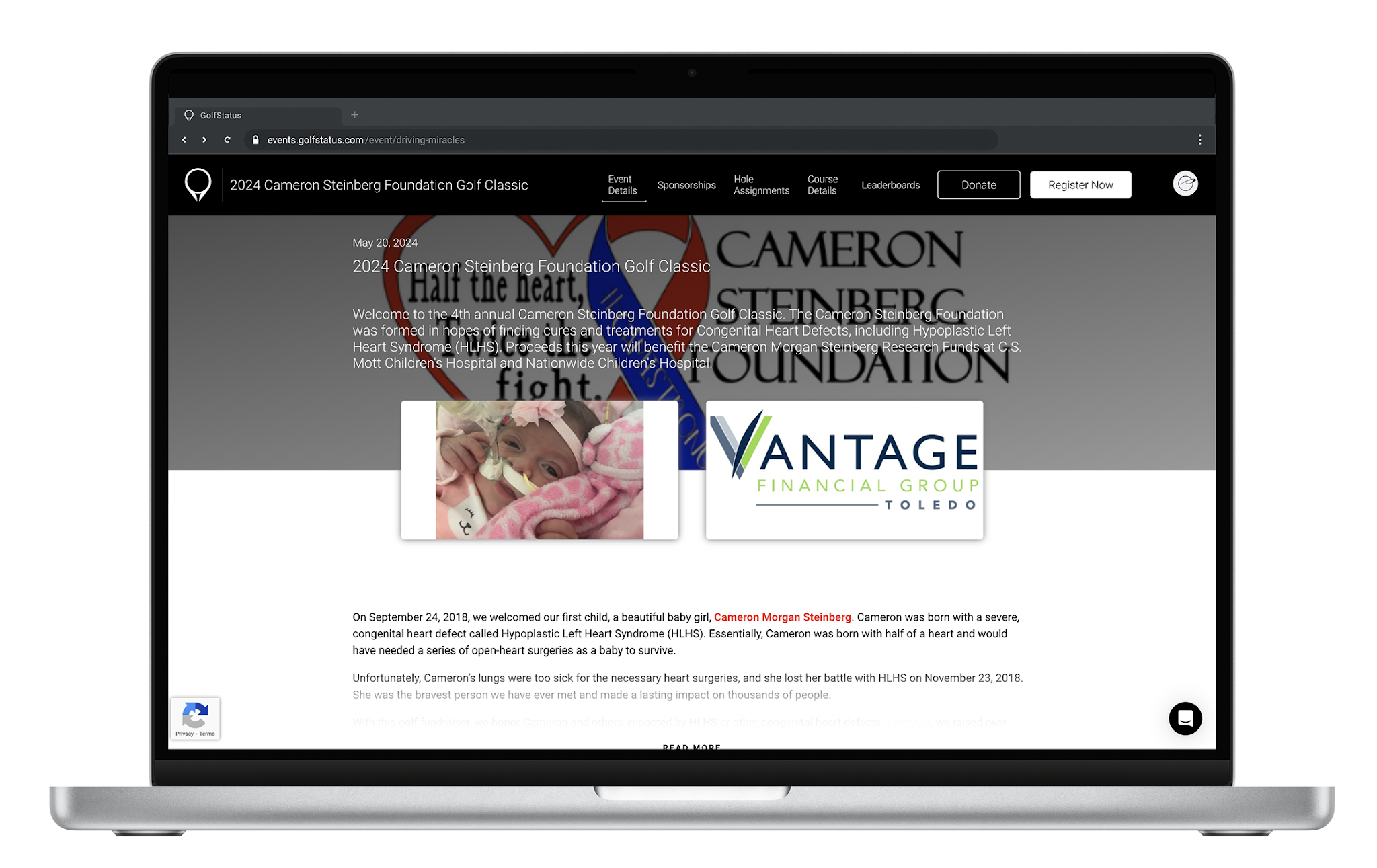
The Cameron Steinberg Foundation golf tournament website is displayed on a laptop.
 

2. make registration as easy as possible

Online registration is the standard for events these days, and golf tournaments are no different. It’s quick, convenient, and saves everyone—organizers and golfers alike—time and hassle. Everyone is busy, so an event site equipped with a simple registration checkout process is key to getting them on board. Be sure that the website is mobile-friendly so golfers can register right from their phones!

3. make it irresistible

It starts by understanding your target audience and what would appeal to them. Would they be interested in golfing at (and paying the corresponding registration fee) a high-end, private club? Or is a public course with a lower registration fee more appealing? Both can be a draw for golfers, depending on your supporters’ preferences. Attractive prizes, memorable add-ons, alternative or inclusive formats, and fun contests also go a long way toward getting golfers to say “yes” to your event, so highlight these throughout your promotions.

A golfer at a mini golf tournament his the ball toward the hole.
 

4. get in touch with past event participants & supporters

If yours is an existing event, start with past golfers. Invite them to come back and play in support of your mission. You might offer a special discount code or registration rate for returning players to sweeten the deal. If you’re getting a new golf event up and running, reach out to past participants in other events your nonprofit has held or participated in. Ask your loyal supporters to share the word about the upcoming golf tournament. You might provide some copy/paste verbiage or social graphics they can use on their personal channels.

5. leverage sponsors & other partners

Sponsors are a major part of your golf tournament’s success. Leverage their participation and networks to help attract players. Sponsors and businesses will often use charity golf tournaments to entertain clients, woo prospects, network, and even reward employees, so it makes sense to build a team or two into some of your sponsorship packages. Not only does this add value, but it also helps fill your tournament’s field in the process. You might also consider providing promotional assets (logos, verbiage, graphics, etc.) to your sponsors and invite them to share them on their social media platforms and with their employees.

Golfers sit at tables for dinner and to network after a charity golf tournament.
 

6. get your board & planning teams involved

Ask each member of your nonprofit’s board and tournament planning committee to think of five to 10 contacts they’ll invite to play in the event. This bite-sized request makes it easy for them to follow up and broadens your pool of potential golfers. Set them up for success with talking points or email templates to help with their outreach.

7. send promotional emails

Email marketing is a cost-effective way to cast a wide net of potential golfers. Start with a save-the-date email to last year’s golfers and sponsors and/or your nonprofit’s email list as soon as you finalize the date and course. Send strategic reminder emails at intervals leading up to the tournament date. Consider adding an early bird registration period or a registration closing date to help create urgency among potential participants and get them to commit earlier.

8. use social media effectively

Social media is another cost-effective promotional vehicle for your event. Utilize your nonprofit’s presence to drive registrations via your event website. Create a Facebook event and make your planning team co-hosts so they can invite their networks to register and widen your reach. Tap into Facebook groups—there are often groups strictly for sharing nonprofit fundraising events, golf tournaments, or community events. If you have a few dollars to spare, consider a limited paid ad campaign that targets a specific geographic area or interests. If you spend even $100, but get one or two teams to register as a result, you’ve gotten good ROI!


using social media to amplify your golf fundraiser

Download this free guide to find out how to leverage social media to make the most out of your charity golf tournament and raise the most money possible for your cause!


9. Promote it to your community

Your community likely has event boards, community calendars, or other similar avenues to promote local events. Submit your tournament to such channels, and consider reaching out to local television and radio stations with a press release or an ask to list on their website. Use community gathering spots such as grocery stores, coffee shops, libraries, community centers, gyms, churches, or other locations to post flyers (with a QR code that links to your event site) advertising your tournament. The host golf facility may be willing to post flyers in the clubhouse as well, so don’t be afraid to ask!

10. leverage your tech stack

When you use GolfStatus to host your golf tournament website and manage your event, your tournament reaches tens of thousands of avid golfers in your area who actively look for local charity tournaments to play in. Your event will be listed on events.golfstatus.com as well as on the GolfStatus mobile app, helping you reach new golfers—and potential new supporters.

A website listing golf tournaments that use GolfStatus is displayed on a laptop. A mobile device showing an golf tournament event site is next to it.
 

11. connect golfers to your cause

Be sure to help golfers understand 1. what they’re supporting by playing golf and 2. the impact of their participation on your work. Use your event website to help tell the story, and build in elements of cause connection to your tournament to help golfers get a tangible understanding—such as one team registration feeds a shelter pet for a month—of how they’re helping move your mission forward. You might use banners, signage, displays, guest speakers, beneficiary testimonials, or elements of on-course games to drive home the goals of the tournaments.


No-Risk, No-Cost Tech for Your Next Golf Event

No matter if you’re holding your first golf tournament or your twentieth, you need a golf-specific event management tool to make your life easier. GolfStatus’ robust platform is built to handle the unique needs that come with a golf event, like team pairings, hole assignments, handicaps, and more. Built-in fundraising features and exclusive revenue-boosting add-ons and sponsorships help raise more money for your cause, while automations and our industry-leading support team help save you time and effort. Best of all, nonprofits can qualify for a free event website and no-cost access to the GolfStatus platform through the Golf for Good program. Click below to learn more and get qualified!

Ready to get started?

Click here to get qualified to use GolfStatus at no cost!